
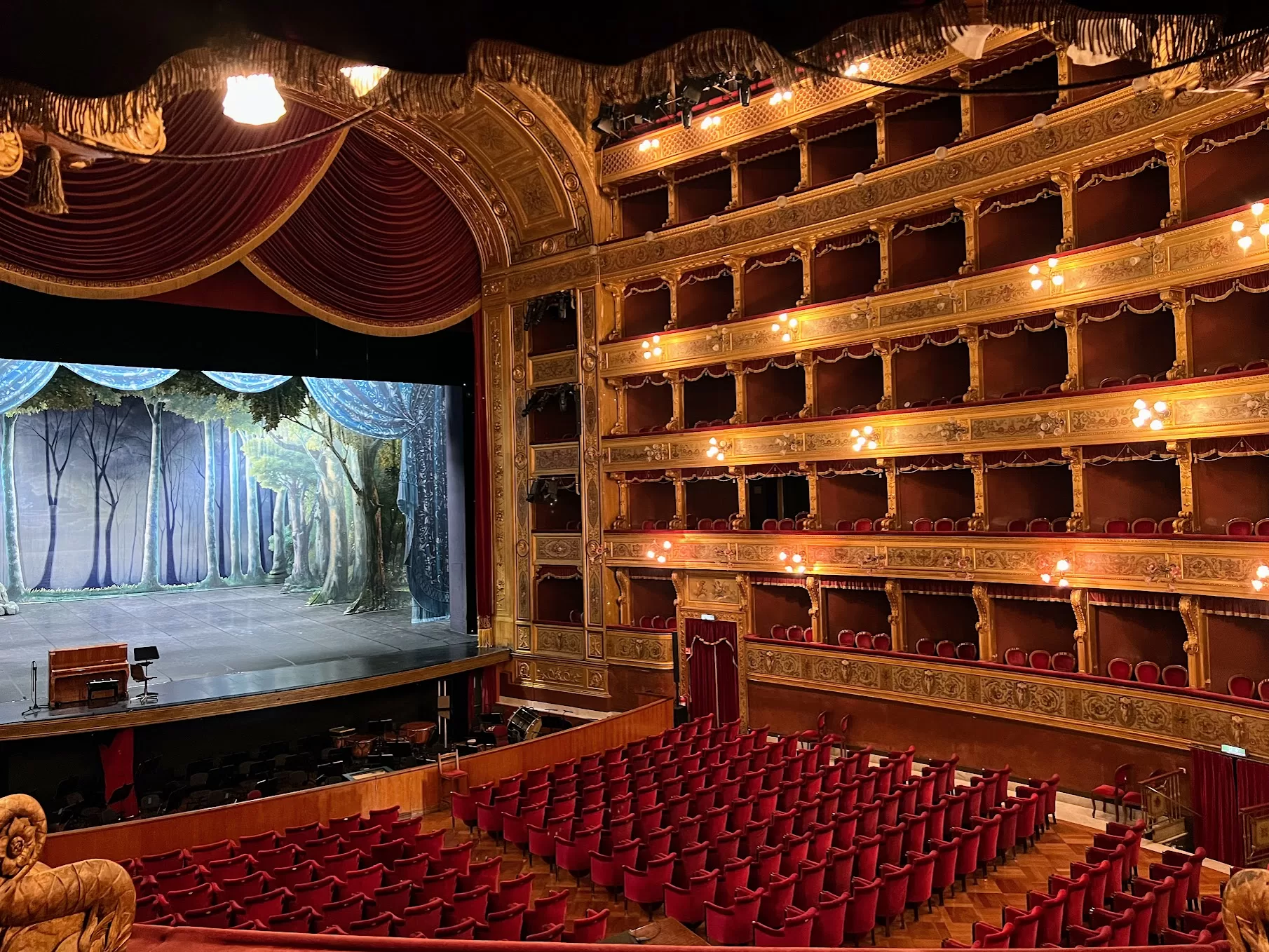
Teatro Massimo in Palermo, the largest opera house in Italy and the third-largest in Europe.
Learn about the unique history and culture of Sicily through these 10 interesting facts!
Sicily has been ruled by more civilizations than almost any other place in Europe due to its strategic location in the Mediterranean. Over the centuries, it was ruled by Greeks, Carthaginians, Romans, Byzantines, Arabs, Normans, Angevins, Spanish, and others until it became part of unified Italy in 1861. Each wave of foreign rule left a lasting impact on the island’s culture and identity.
Sicilian is a Romance language with influences from Latin, Greek, Arabic, Norman French, and Spanish. UNESCO recognizes it as a separate language from Italian, with its own grammar, vocabulary, and pronunciation. Most Sicilians are bilingual in Sicilian and Italian.
Palermo was one of the largest and most cosmopolitan cities in Europe during the Middle Ages, home to Muslims, Byzantines, Latins, Jews, and French. The exquisite Arab-Norman Palatine Chapel showcases this syncretism and the fruitful coexistence and collaboration of people of different origins and religions with its Byzantine mosaics, Islamic muqarnas ceiling, and Latin symbols.
Palermo, the capital, is Sicily’s largest city. It is home to around 650,000 people, making it the 5th largest city in Italy by population (after Rome, Milan, Naples, and Turin). Catania is the second, with approximately 300,000 people, followed by Messina (~220,000), Syracuse, Marsala, and Trapani.
Sicily, despite its rich cultural heritage and strategic location, has been historically neglected by central governments, like much of southern Italy. It has long faced socioeconomic challenges as a result and suffered from chronic underdevelopment and inadequate infrastructure, limited industrial growth, high unemployment rates, and widespread poverty, particularly in rural areas.
The Sicilian Mafia emerged in the 19th century as a group providing protection to landlords in a region with weak law enforcement. It evolved into a powerful criminal organization involved in extortion, smuggling, and murder. But modern Sicily has also been the site of strong anti-Mafia movements, especially since the shocking assassinations of anti-Mafia judges Giovanni Falcone and Paolo Borsellino in 1992. Civil society groups now work openly against the Mafia, and businesses affiliated with the Addiopizzo movement declare on storefronts they don’t pay protection money.
Sicily is one of Italy’s most exciting wine regions. Marsala is a historic fortified wine made popular by the British in the 18th century. But Sicily also produces highly regarded non-fortified wines like Nero d’Avola, Grillo, Frappato, Catarratto, and volcanic Etna wines known for their mineral complexity.
Sicily produces a variety of gourmet food products, like pistachios from Bronte – considered among the best in the world, chocolate from Modica made with an ancient Aztec cold-processing method introduced by Spanish colonists, Sicilian sea salt, canned fish, and bottarga (cured tuna roe).
Sicily’s flag features the Triskelion (known in Sicily as the Trinacria). The head of Medusa is surrounded by three bent legs, symbolizing the island’s triangular shape. The red and yellow background represents Palermo and Corleone, key cities in an uprising against the Angevins.
Mount Etna is not only the most active stratovolcano in the world but also a UNESCO World Heritage Site. Its eruptions have shaped the island’s geology and enriched the surrounding soil, making the area one of Italy’s most fertile agricultural zones. The volcano has also played a role in local mythology. It was believed by the ancient Greeks to be a gateway to the underworld.

Leave A Comment